
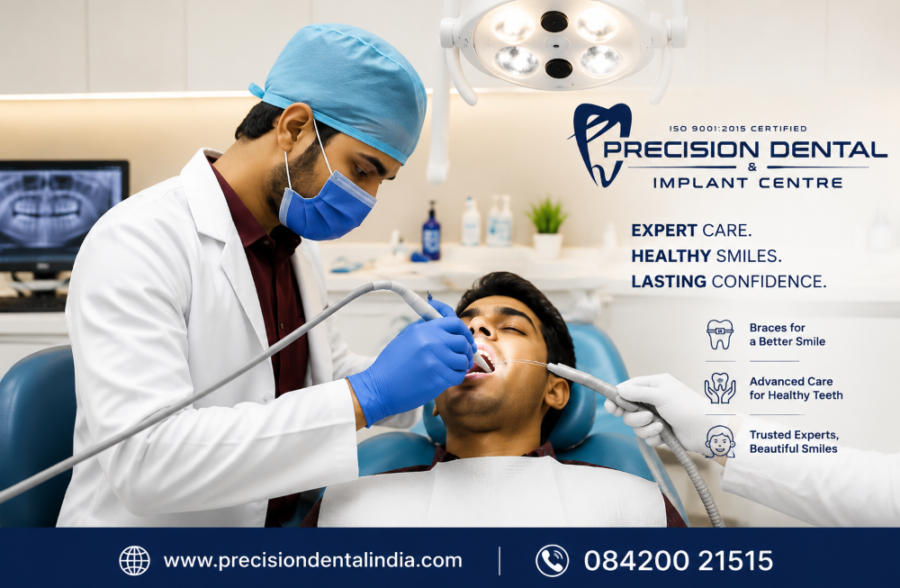
Laser-assisted root canal treatment (RCT) in Kolkata is an advanced dental procedure that combines traditional RCT with laser technology to clean and disinfect infected tooth canals more precisely. It helps improve bacterial removal, clean hard-to-reach canal areas, reduce discomfort, and support faster healing.
The treatment is commonly recommended for patients with deep tooth infections, severe decay, or inflamed dental pulp who want to preserve their natural tooth. This advanced dental treatment is minimally invasive.
What Is Laser-Assisted Root Canal Treatment?
A root canal treatment is done when the soft inner part of the tooth, called the pulp, becomes infected or inflamed. This can happen due to deep cavities, cracks, repeated dental procedures, or injury.
In a regular RCT, the dentist removes the infected pulp, cleans the canals, shapes them, and seals the space. In a laser-assisted RCT, a dental laser is used during the cleaning and disinfection stage.
The laser uses focused light energy to help reduce bacteria and clean areas that may be difficult to reach with regular instruments alone. Since root canals are narrow and can have tiny side branches, this added step may improve the overall cleaning process.
How Does Laser-Assisted Root Canal Treatment Work?
The procedure starts much like a conventional root canal treatment.
1. Diagnosis and X-ray
The dentist first examines the tooth and may take an X-ray to understand the depth of infection, root shape, and bone condition around the tooth.
2. Removal of Infected Pulp
The infected or inflamed pulp is carefully removed from inside the tooth. This helps reduce pain and stops the infection from spreading further.
3. Laser Disinfection
Once the canals are opened, the laser is used inside the root canal system. It helps reduce bacterial load and disinfect microscopic areas within the canal.
The laser works through concentrated light energy that:
- destroys bacteria
- vaporizes infected tissue
- disinfects microscopic canal spaces
- reduces contamination
This is particularly useful because tooth canals are extremely narrow and complex. Some canals have curves, narrow spaces, or tiny branches that need careful cleaning.
4. Cleaning, Shaping, and Sealing
After laser disinfection, the canals are cleaned further, shaped, and sealed with a biocompatible filling material.
5. Final Restoration
Depending on the tooth condition, the dentist may restore it with a filling or recommend a crown. A crown is often advised for back teeth because they handle stronger chewing forces.
Who Is Suitable for Laser-Assisted RCT?
Laser-assisted root canal treatment may be suitable for patients with:
- Severe tooth decay
- Infected dental pulp
- Persistent tooth pain
- Dental abscess
- Pain while chewing
- Sensitivity to hot or cold foods
- Failed or incomplete previous RCT
- Complex root canal anatomy
Patients looking for advanced treatment at a top dental clinic in Kolkata may consider laser-assisted RCT for better cleaning and comfort.
However, not every case requires a laser. Suitability depends on:
- Tooth condition
- Infection severity
- Gum health
- Bone support
- Previous dental history
- Root canal structure
A proper dental examination and X-ray are needed before deciding the right treatment plan.
Benefits of Laser-Assisted Root Canal Treatment
Laser-assisted RCT can make root canal treatment more comfortable, cleaner, and more supportive of long-term tooth health when recommended for the right case.
Painless & Comfortable
The procedure is performed under local anaesthesia, and laser support may reduce irritation, making the experience smoother and more comfortable for many patients.
Superior Sterilization / Accurate Infection Removal
Laser energy helps disinfect narrow canal areas and supports more accurate removal of bacteria from spaces that are difficult to clean manually.
Tooth Preservation
Lasers can target infected areas inside the tooth with greater accuracy while helping preserve nearby healthy tooth structure. This supports stronger, more natural tooth preservation compared to more invasive approaches.
Faster Recovery
Because the laser is gentle on surrounding tissues, many patients experience easier healing and return to normal routines soon after treatment.
Minimal Swelling
Laser-assisted cleaning may cause less tissue irritation, which can help reduce post-treatment swelling and tenderness in selected cases.
Recovery After Laser-Assisted Root Canal Treatment
Recovery after laser-assisted RCT is generally faster than the conventional procedure.
Most patients can:
- Return to work the same day
- Eat soft foods after numbness wears off
- Resume normal activities quickly
- Notice improvement within a few days
Common Recovery Signs
You may experience:
- Mild tenderness for 1–3 days
- Temporary chewing sensitivity
- Slight gum irritation
- Gradual pain relief after infection removal
Complete healing around the root may take longer, especially if the infection was deep before treatment.
How Long Do the Results Last?
Laser-assisted RCT can provide long-term results if the treated tooth is properly restored and maintained.
However, permanence depends on:
- oral hygiene
- crown placement if required
- avoiding tooth fractures
- regular dental check-ups
A successfully treated tooth can often last many years or even decades.
Pros and Cons of Laser-Assisted RCT
| Pros | Cons |
| Better canal disinfection | Not suitable for every case |
| Reduced bacterial load | Needs specialised equipment |
| Minimally invasive approach | Some cases still need traditional techniques |
| May improve patient comfort | Recovery varies from person to person |
| Useful in complex canal spaces | Multiple visits may still be required |
Laser-assisted RCT is best understood as an advanced support to conventional root canal treatment, not a separate replacement for it.
Are There Any Risks or Side Effects?
Laser-assisted RCT is generally safe when performed by an experienced dentist using the right settings and technique.
Common Temporary Side Effects
- Mild swelling
- Tooth sensitivity
- Tenderness while chewing
- Slight gum irritation
Less Common Risks
- Incomplete infection removal
- Reinfection
- Tooth fracture if not restored properly
- Irritation of nearby tissues
- Need for retreatment in complex cases
These risks are not limited to laser-assisted RCT. They can occur with any root canal treatment if diagnosis, cleaning, sealing, or restoration is not done properly.
What Should Patients Do After Treatment?
After laser-assisted RCT, your dentist may advise you to:
- Avoid hard foods for a few days
- Chew from the opposite side until final restoration
- Maintain brushing and flossing
- Take prescribed medicines if advised
- Return for follow-up appointments
- Get a crown if the tooth needs extra protection
You should contact your dentist if you notice severe swelling, fever, persistent pain, difficulty biting, or signs of infection.
How to Choose the Right Dental Clinic in Kolkata
Choosing the right clinic matters because laser-assisted root canal treatment needs careful diagnosis, cleaning, sealing, and restoration.
Look for a clinic that offers:
- Proper dental examination and X-rays
- Experience in Laser-assisted dental treatments
- Use of modern tools and technology
- Strong sterilisation standards
- Clear explanation of treatment steps
- Transparent guidance without rushing the patient
Final Thoughts
Laser-assisted RCT is becoming an increasingly preferred option for patients seeking advanced and minimally invasive dental care. By combining traditional root canal therapy with laser technology, the procedure aims to improve disinfection, precision, and patient comfort while preserving the natural tooth.
However, remember that treatment success still depends on accurate diagnosis, proper aftercare, and choosing an experienced dental clinic in Kolkata for evaluation and long-term dental management.
If you are experiencing persistent tooth pain or signs of dental infection, consulting a board-certified dentist in Kolkata can help determine whether laser-assisted RCT is the right treatment approach for your condition.
Frequently Asked Questions
1. Is laser-assisted RCT painful?
Laser-assisted RCT is usually done under local anaesthesia, so most patients remain comfortable during the procedure. Mild soreness after treatment may happen but usually settles within a few days.
2. Is laser-assisted RCT better than regular RCT?
Laser-assisted RCT may improve canal disinfection in selected cases. However, it works best as an additional support to standard root canal steps, not as a complete replacement.
3. How many sessions are needed for laser-assisted RCT?
Some cases may be completed in one visit. More complex infections may need two or more appointments, depending on the tooth condition.
4. Can I eat after laser-assisted RCT?
You should wait until the numbness wears off before eating. Soft foods are usually recommended at first, especially if the final crown has not been placed yet.
5. Can a laser-treated tooth get infected again?
Yes, reinfection can happen if bacteria enter through a crack, leaking filling, poor restoration, or inadequate oral hygiene. Proper sealing, crown protection, and follow-up care reduce this risk.
6. Who should consider laser-assisted root canal treatment in Kolkata?
Patients with deep decay, infected pulp, dental abscess, persistent tooth pain, or complex canal anatomy may benefit from laser-assisted RCT after proper dental evaluation.
7. Is a crown needed after laser-assisted RCT?
A crown may be needed if the tooth is weak, badly damaged, or located at the back of the mouth. It helps protect the treated tooth from fracture during chewing.