
Wanting a better smile is easy. Walking into a Cosmetic Dentistry clinic in Kolkata to actually ask about it is often the harder part. Many patients delay this simple conversation for years, not because they lack the desire, but because of fear. Fear of pain, unnatural results, or a decision that cannot be undone. This is not a failure of judgement. It is simply what happens when hearsay, old stories, and one bad experience someone else had traveled faster than facts.
Smile design is one of the most misunderstood treatments in cosmetic dentistry. This guide separates what is actually true from what only sounds true because it gets repeated often, so the decision to move forward or not, can rest on facts rather than assumption.
Individual results and treatment may vary. Please consult a qualified dentist for a personalised evaluation before deciding.
Why Smile Design Feels Scarier Than It Is
Fear usually grows in the gap between not knowing and assuming the worst. Many patients picture smile design as one big, irreversible surgery. In reality, the first step is always a conversation and not a procedure.
A qualified dentist in Kolkata evaluates your teeth, gums, and facial proportions before suggesting anything. Nothing is decided in a single sitting, and nothing begins without your understanding of what each step involves.
Myth 1: Results Always Look Artificial
Myth: Smile design always leaves you with an overly bright, uniform smile.
Facts:
- That look is a planning choice, not an inevitable outcome
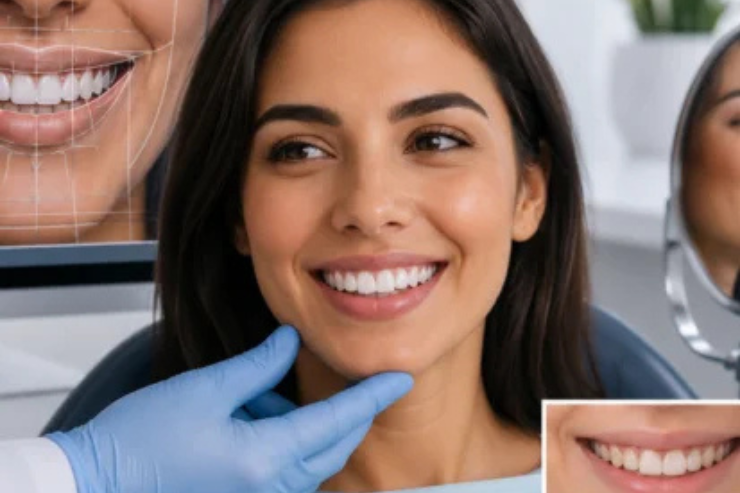
- Digital smile design uses your natural lip line, gum contour, and tooth proportions
- Many patients specifically ask for subtle, believable changes over a dramatic transformation
Myth 2: It Is Only for Celebrities
Myth: Smile design is only for celebrities or red-carpet photos.
Facts:
- Most patients seeking it deal with everyday concerns
- Common reasons include a chipped front tooth, years of tea or coffee staining, or visible gaps
- None of these require a public profile to justify treatment
Myth 3: No Care Is Needed Afterward
Myth: Smile design is a one-time fix that ends all future dental care.
Facts:
| What Patients Expect | What Actually Helps |
| “Once done, it’s permanent” | Longevity depends on oral hygiene and habits |
| “No more dental visits” | Regular check-ups are still needed |
| “Any diet is fine” | Staining foods and habits can still affect results |
Ongoing care is what keeps the result looking good for years, not just for the first few months.
Myth 4: Smile Design Only Fixes Teeth
Myth: Smile design is only about reshaping or whitening teeth.
Facts:
- Gum shape, gum colour, and lip line are assessed just as closely as the teeth
- A plan that ignores gums often looks unfinished, even with well-shaped teeth
- Treatments like gum contouring or depigmentation are often part of the same plan
Myth 5: Unsafe for Sensitive Teeth
Myth: Smile design is not an option if you already have sensitive teeth.
Facts:
- Sensitivity is assessed during the consultation, before any plan is finalised
- Certain steps, like whitening strength or pacing, can be adjusted around it
- Some treatments, such as bonding, involve minimal impact on sensitive areas
Myth 6: It Removes Healthy Tooth Structure
Myth: Smile design always means shaving down healthy teeth.
Facts:
- Whitening, bonding, and gum contouring involve no enamel removal at all
- Veneers, when needed, typically require only a thin layer of preparation
- The amount of tooth structure involved depends entirely on the specific case
Smile Design or Veneers: Are They the Same?
Smile design and veneers are often used as if they mean the same thing. They do not.
- Veneers are one treatment option — thin shells placed on the front of teeth
- Smile design is a broader plan that may include veneers, whitening, bonding, or gum correction
- The right combination depends on what a particular smile needs, not a fixed package
Veneers can be part of a smile design plan, but a smile design plan is rarely just veneers.
Does Smile Design Affect Oral Health Too?
Smile design is often seen as purely cosmetic, but oral health is usually part of the same conversation.
- Correcting worn or uneven edges can also improve bite comfort and chewing
- Gum-related steps, such as depigmentation or contouring, support gum health when planned correctly
- A stable, healthy mouth is usually addressed first, since cosmetic changes work best on a healthy foundation
What a Smile Design Consultation Involves
A Smile Design Treatment consultation in Kolkata is largely about listening and assessing, not convincing.
- Discussion of what specifically bothers you about your smile
- Examination of teeth, gums, and bite
- Photographs or digital previews to visualise possible changes
- A treatment plan built around your goals, not a fixed package
Nothing here resembles the dramatic “before and after” moment people expect. It is a slower, more considered process.
Smile Design Side Effects: What to Expect
This is a genuine and fair question, and one worth answering honestly. Depending on the treatments involved, patients may notice:
- Mild, temporary sensitivity to hot or cold
- Slight gum tenderness after procedures like depigmentation or contouring
- A short adjustment period in speech or bite if tooth shape changes
These effects are usually short-term and expected as part of healing. Individual results and recovery can vary, which is exactly why a proper evaluation matters before starting.
Questions Worth Bringing to Your Visit
Walking in with a few questions prepared can make the conversation more useful.
- Which specific treatments are being recommended, and why
- What materials will be used, and how long they typically last
- How many visits the full plan will need, start to finish
- What day-to-day care or maintenance will be expected afterward
A clear answer to each of these is usually a good sign of a well-planned approach.
Knowing the Facts Changes the Question
So, is it as scary as the myths suggest? Mostly, no, what makes smile design feel risky is usually built on assumption, not fact. Pain is manageable, results can look natural, gums matter as much as teeth, and the process itself is slower and more considered than it seems from the outside.
None of this means smile design is the right choice for everyone, since individual results vary and that is exactly why a proper evaluation matters more than any general claim. If you are still hesitating, let that hesitation come from an honest conversation with your treating doctor, not from a myth that never held up in the first place.
Author:
Dr. Sayak Gupta
- BDS, MDS (Conservative Dentistry & Endodontics)
- FICOI (USA), Assoc. Fellowship – Laser Dentistry (WCLI, USA)
Frequently Asked Questions
Q1) Is smile design a permanent solution?
Many outcomes are long-lasting, but permanence depends on the specific treatments used, oral hygiene, and habits like smoking or teeth grinding. Your dentist can explain what to expect for your particular case.
Q2) Does smile design always involve surgery?
No. Many smile design plans use whitening, bonding, or veneers alone. Surgical steps, such as gum contouring, are only included when the case specifically requires them.
Q3) How long does a full smile design treatment take?
Timelines vary widely, from a single visit for minor changes to several weeks for combined treatments involving veneers, gum work, or orthodontic input.
Q4) Can smile design fix crooked teeth without braces?
In select cases, veneers or bonding can visually improve minor misalignment. More significant crookedness may still need orthodontic correction first.
Q5) Are smile design side effects common or rare?
Mild, short-term effects like sensitivity or gum tenderness are fairly common and expected. Serious complications are uncommon when the treatment is properly planned and monitored.
Disclaimer: This content is for general educational purposes only and does not constitute medical advice. Outcomes vary between individuals. Please consult your treating doctor for a personalised assessment before starting any treatment.