
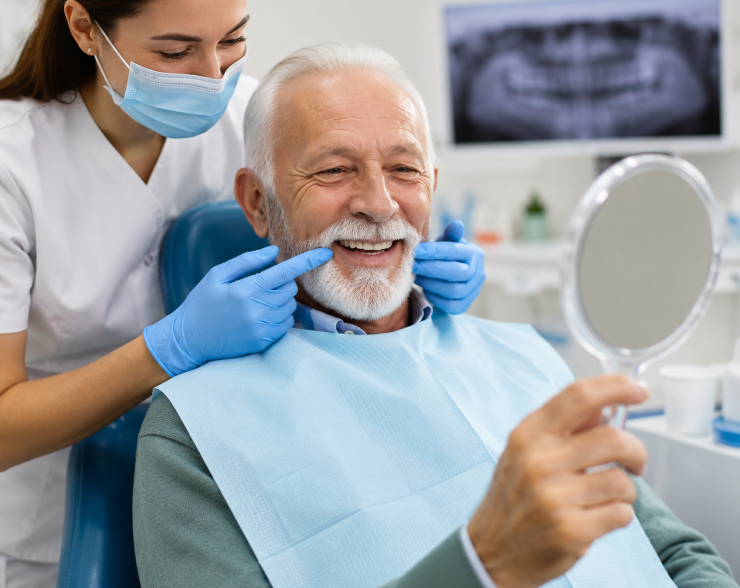
Ageing affects every part of the body — and teeth are no exception. Decades of use, wear, old fillings, gum problems, and missed dental visits all add up. By the time most seniors seek help, the concern is rarely just one tooth. It is usually several — and the problems are connected.
Full mouth rehabilitation for seniors is not about vanity. It is about restoring the ability to eat comfortably, speak clearly, and maintain overall health — because poor dental health in older adults has a direct impact on nutrition, confidence, and quality of life.
Why Seniors Face More Complex Dental Problems
Dental issues in older adults tend to be more layered than in younger patients — not because ageing is the villain, but because problems that were manageable at 40 become significant at 65 or 70.
Decades of Wear and Old Dental Work
Fillings placed 30 or 40 years ago were not designed to last forever. They crack, leak, and eventually fail. Teeth that were crowned years ago may have developed decay underneath. What looked stable can quietly deteriorate over time.
Dry Mouth From Medications
Many seniors take medications for blood pressure, diabetes, thyroid, or heart conditions. A very common side effect of these medicines is dry mouth — and saliva plays a critical role in protecting teeth from decay. Less saliva means faster deterioration.
Bone Loss Around Teeth
Gum disease that has been present for years slowly destroys the bone that holds teeth in place. By the senior years, this bone loss can be significant — loosening teeth and making restoration more complex.
Missing Teeth That Were Never Replaced
Many people lose a tooth and do not replace it immediately. Over time, the neighbouring teeth shift, the opposing tooth over-erupts, and the jawbone in the gap shrinks. What could have been a simple fix becomes a structural problem.
What Does Full Mouth Rehabilitation Actually Involve?
Full mouth rehabilitation is a treatment plan — not a single procedure. It addresses all the teeth together, in a planned sequence, so that the outcome is stable and long-lasting.
For seniors, the plan typically involves a combination of:
- Removing teeth that cannot be saved and planning replacements from the start
- Treating gum disease before any restoration begins — this is always the foundation
- Root canal treatments to save teeth that are infected but structurally viable
- Crowns to rebuild teeth that are cracked, broken, or heavily decayed
- Dental implants or implant-supported dentures to replace missing teeth permanently
- Conventional dentures or bridges where implants are not suitable
- Bite correction to ensure the restored teeth function evenly and comfortably
The sequence matters. Gum and bone health comes first. Restoration follows. Cosmetic refinements, if needed, come last.
When Is Full Mouth Rehabilitation Specifically Needed For Seniors?
Not every senior needs full mouth rehabilitation. But it becomes the right approach when:
Multiple Teeth Are Damaged or Missing
When four, five, or more teeth are affected — whether by decay, fracture, or absence — treating them individually without a coordinated plan often leads to repeated failures.
Chewing Has Become Difficult or Painful
Many seniors quietly adjust their diet — avoiding hard foods, chewing only on one side, or switching to softer options. This is a sign that the mouth is not functioning the way it should, and it affects nutrition directly.
Dentures No Longer Fit Properly
Ill-fitting dentures are extremely common in older adults. As the jawbone shrinks over time, dentures that once fit well become loose, uncomfortable, and ineffective. Implant-supported solutions often provide a far more stable and comfortable alternative.
Jaw Pain or Frequent Headaches
A poor bite — caused by missing teeth, worn teeth, or old dental work that has shifted — puts uneven pressure on the jaw joint. This often presents as jaw pain, clicking, or headaches that seem unrelated to dental health.
Oral Health Is Affecting Overall Health
Research consistently links poor oral health to conditions like diabetes, heart disease, and respiratory problems — all of which are already more prevalent in older adults. Addressing dental health comprehensively is not a luxury at this stage of life; it is a health decision.
If you are a senior — or caring for one — and recognise several of these signs, a thorough evaluation at a good dental clinic in Kolkata is a sensible and important first step.
Special Considerations for Senior Patients
Full mouth rehabilitation for seniors requires a more careful and considered approach than for younger patients.
Medical History Matters
Conditions like diabetes, osteoporosis, or blood thinners affect healing and treatment planning. A dentist handling senior rehabilitation must coordinate with the patient’s physician where necessary. This is why choosing the right dental clinic in Kolkata for senior rehabilitation matters — not just for the procedures, but for how the overall care is managed.
Bone Density
Osteoporosis affects jawbone density, which is relevant when planning dental implants. In some cases, bone grafting is needed before implants can be placed. This adds time but makes the outcome more predictable.
Pace of Treatment
Seniors may need procedures spread out more gradually to allow adequate healing between stages. This is not a limitation — it is responsible treatment planning.
Comfort and Anxiety
Many older patients have had difficult dental experiences in the past. A good dental team will take the time to explain each step, work at a comfortable pace, and ensure the patient feels informed and at ease throughout.
How Long Does It Take and What Can Be Expected?
The timeline varies considerably depending on how many teeth are involved and what treatment is needed. A straightforward case may be completed in three to four months. A complex case involving implants, bone grafting, and full arch restoration can take a year or more.
What seniors can realistically expect after full mouth rehabilitation:
- The ability to eat a wider range of foods comfortably
- Relief from jaw pain, sensitivity, or discomfort while chewing
- Stable, well-fitting teeth — whether natural, crowned, or implant-supported
- Improved speech if missing teeth had been affecting it
- Better oral hygiene, since restored teeth are easier to clean than damaged or broken ones
Take the First Step Towards a Healthier Mouth
Dental problems do not improve on their own — and for seniors, waiting usually means more bone loss, more tooth loss, and fewer options.
The good news is that modern dentistry has solutions for even the most complex situations. A proper evaluation is where everything begins.
Precision Dental & Implant Centre — an advanced dental clinic in Kolkata for senior dental care and full mouth rehabilitation — Dr. Sayak Gupta brings the right expertise to handle complex cases with the care and attention older patients deserve. Book a consultation today and get a clear, honest picture of what is possible.
FAQs
Q1: My parents are in their 70s. Is it too late for this kind of treatment?
Age alone is not a reason to avoid treatment. What matters is overall health and what the mouth specifically needs. Many people in their 70s and 80s successfully undergo full mouth rehabilitation and see a significant improvement in their quality of life. A proper assessment will give a clear picture of what is suitable.
Q2: Are dental implants safe for older patients?
Yes, in most cases. The main factors are overall health, bone density, and whether certain medical conditions or medications need to be accounted for. Where bone has been lost, it can often be rebuilt before the implant is placed. A dentist experienced in treating senior patients will assess all of this before recommending implants.
Q3: My parent has loose dentures. What are the options?
Loose dentures are one of the most common complaints among older adults. The bone underneath continues to shrink after teeth are lost, which is why dentures that fit well initially become loose over time. Implant-supported dentures — where the denture clips onto two or more implants — offer a far more stable and comfortable solution for most patients.
Q4: How do we manage this if my parent is on multiple medications?
This is an important question and one a good dentist will always ask about. Some medications affect healing, bleeding, or bone health. The dentist will review the full medication list and, where needed, coordinate with the treating physician before proceeding. It is not a reason to avoid treatment — it is simply something that needs to be factored into the plan.
Q5: Will it be painful for an elderly patient?
Treatment is carried out under local anaesthesia, so there should be no pain during the procedures themselves. Post-procedure soreness is normal and managed with appropriate medication. For seniors who are anxious, many dental practices offer sedation options to make the experience more comfortable. The treatment plan is also typically paced more gradually for older patients.