

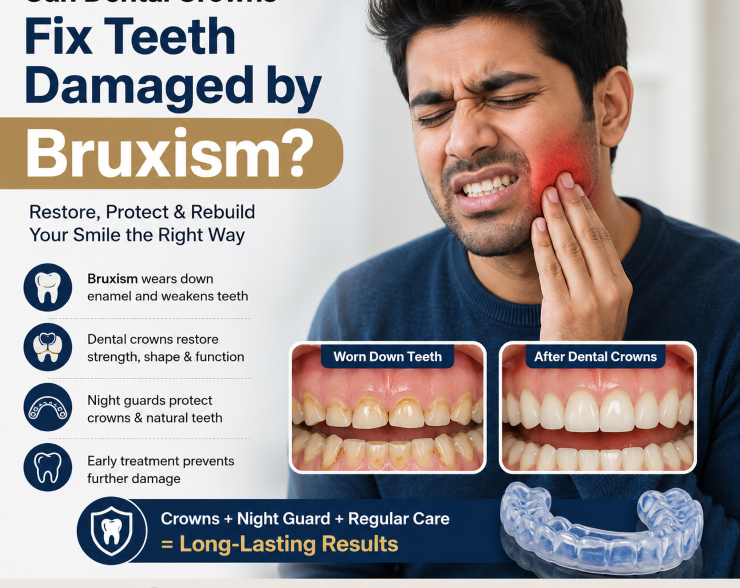
Teeth grinding or bruxism can quietly wear down your smile before you even realise the damage is happening. If you are wondering whether dental crowns for bruxism are the right solution, here is what you need to know first: crowns can absolutely restore teeth that grinding has damaged — but they work best as part of a complete protection plan, not as a standalone fix.
With the right care, your smile can look and function better than ever.
What Is Bruxism and Why Does It Damage Teeth?
Bruxism means grinding or clenching. Bruxism is when a person grinds, clenches, or presses their teeth together — either during the day or while asleep. It is more common than most people realise.
Sleep bruxism can be easy to miss
Many people do not know they grind their teeth at night until a dentist notices the early signs of wear during a routine check-up.
Common signs of bruxism to watch for
- Flat or shorter-looking teeth
- Chipped or cracked edges
- Tooth sensitivity to hot, cold, or sweet foods
- Jaw pain or tightness in the morning
- Frequent headaches upon waking
- Broken fillings or crowns that keep recurring
How Bruxism Damages Natural Teeth
It gradually wears away enamel
Enamel is the hardest substance in the body — but constant grinding is persistent. Over time, it removes the tooth’s protective outer layer, leaving teeth vulnerable.
It exposes sensitive inner layers
As enamel wears away, the sensitive dentine underneath becomes exposed, causing discomfort with everyday foods and drinks.
It creates cracks under pressure
Repeated grinding force creates micro-cracks that can deepen over time, weakening the tooth’s overall structure.
It can quietly shift your bite
When teeth become uneven or shorter, chewing can start to feel off — and that imbalance places further strain on the jaw and remaining teeth.
When Do Dentists Recommend Dental Crowns for Bruxism Damage?
When teeth are significantly worn down
If a tooth has lost too much of its natural structure, a crown rebuilds it fully — restoring both function and appearance.
When cracks are present
A crown wraps around a weakened tooth, holding it together and preventing further damage from spreading.
When sensitivity is affecting daily life
Deep wear can make eating and drinking uncomfortable. Crowns cover and seal the tooth, reducing sensitivity considerably.
When fillings keep breaking
Large fillings under grinding pressure tend to fail repeatedly. A crown offers far more durable and comprehensive coverage in such cases.
If you are unsure whether your teeth qualify for crowns, visiting a trusted dental clinic in Kolkata for a thorough assessment is the best first step — early evaluation often makes treatment simpler and more affordable.
Are Dental Crowns a Treatment for Bruxism?
Crowns restore what grinding has taken away
They bring back the tooth’s original shape, size, strength, and chewing surface — essentially giving damaged teeth a fresh start.
Crowns address the damage, not the cause
If grinding continues unmanaged, the pressure can still affect the crown, adjacent teeth, and jaw muscles over time.
A complete protection plan matters
A thoughtful dentist will pair crown treatment with a night guard, bite evaluation, and regular follow-up — ensuring your restoration lasts and your jaw stays comfortable.
Do You Still Need a Night Guard After Dental Crowns?
In most cases, yes.
A custom night guard acts as a buffer between your upper and lower teeth during sleep, protecting crowns from the same grinding forces that damaged the original teeth.
It protects your whole mouth, not just the crowns
Natural teeth are just as much at risk. A night guard provides comprehensive protection across your entire bite.
Custom-made guards are significantly better
A dentist-fabricated night guard is designed precisely for your bite, making it far more comfortable, effective, and durable than any over-the-counter alternative.
Can Bruxism Damage Existing Dental Crowns?
Yes — crowns are strong, but not indestructible.
Heavy, persistent grinding can chip, loosen, or wear down a crown over time, especially without protective measures in place.
Signs your crown may be under stress
- The crown feels high or uneven when you bite
- You notice chipping at the edges
- There is soreness in the gum around the crown
- The crown feels slightly mobile
- You are waking with jaw pain or facial tension
Acting early keeps treatment simple
If something feels off with a crown, a prompt check-up allows your dentist to adjust and protect it before anything escalates.
What Happens If Bruxism Damage Is Left Untreated?
Minor wear can become major damage
Grinding that continues unchecked for years can turn manageable wear into severe structural loss.
Small cracks can deepen
A hairline crack ignored today can eventually compromise the entire tooth, requiring far more involved treatment.
Treatment options grow more complex with delay
Early-stage bruxism damage may only need a night guard or minor repair. Delayed care can lead to crowns, root canal treatment, or in serious cases, tooth replacement. Catching it early is always the better path.
How Dentists Decide If You Need Crowns
They assess remaining tooth structure
The dentist examines how much healthy natural tooth is left and whether it can support a crown reliably.
They check for cracks and sensitivity
Visible signs combined with your symptoms help form a clear clinical picture.
They evaluate your bite
A bite assessment identifies areas under disproportionate pressure — a key factor in planning crown placement.
They may use X-rays or digital scans
Imaging reveals the condition of the tooth’s deeper structure and surrounding bone, ensuring nothing is missed.
Other Treatments Often Used Alongside Crowns
Custom night guard
The most important protective measure for bruxism patients — before and after crown placement.
Dental bonding
For minor chips or limited wear where a full crown is not yet necessary.
Tooth-coloured fillings
Suitable for smaller areas of damage with sufficient tooth structure remaining.
Bite adjustment
Selective reshaping of high-pressure areas to redistribute chewing forces more evenly.
Full mouth rehabilitation
For long-standing, severe bruxism affecting multiple teeth — a comprehensive, phased approach to restoring the entire bite.
How to Protect Your Crowns If You Grind Your Teeth
Wear your night guard consistently
It is the single most effective step you can take to extend the life of your crowns and protect your natural teeth.
Keep up with regular dental check-ups
Your dentist can spot early signs of crown stress, wear, or bite changes well before they become problems.
Avoid unnecessarily hard foods and habits
Ice chewing, hard nuts, nail biting, and biting on pens all add unnecessary pressure on crowns and teeth.
Be mindful of jaw tension during the day
Stress and fatigue can increase daytime clenching. Awareness and simple relaxation habits can make a real difference.
Keep up with regular dental check-ups — scheduling routine visits at a reliable dental clinic in Kolkata ensures your dentist can spot early signs of crown stress, wear, or bite changes well before they become problems.
Can Crowns Fix Teeth Damaged by Bruxism?
Absolutely — dental crowns are one of the most effective ways to restore teeth that bruxism has worn down, cracked, or weakened. They rebuild form, function, and confidence in your smile.
The key is pairing the restoration with a protection strategy. Crowns plus a custom night guard, a careful bite assessment, and regular professional care create the conditions for lasting results.
Restore Your Smile — and Keep It That Way
At Precision Dental & Implant Centre, we understand that every damaged tooth has a story — and every patient deserves a personalised plan to restore both function and confidence. As part of one of the modern dental clinics in Kolkata, our team combines advanced diagnostics with genuinely patient-centred care.
Whether you need crowns, a night guard, or a complete smile assessment, Dr Sayak Gupta, a qualified endodontist in Kolkata, brings the precision and expertise to ensure your treatment is right the first time.
Book your consultation today — because your smile deserves expert care, not just a quick fix.
Frequently Asked Questions
Q1. Will getting a crown stop me from grinding my teeth?
No, a crown fixes the tooth that was damaged — it does not stop the grinding habit. Your dentist will usually recommend a night guard alongside the crown to protect the new dental work and prevent further wear.
Q2. Do I definitely need a crown if I grind my teeth?
Not necessarily. If the grinding has been caught early and the damage is mild, a night guard and monitoring may be enough. Crowns are usually recommended when a tooth is badly worn, cracked, or too weak to function properly without support.
Q3. Can grinding actually break a dental crown?
Yes, it can — especially over time. Crowns are very durable, but no material is designed to withstand unchecked grinding indefinitely. Wearing a custom night guard significantly reduces this risk.
Q4. Should I get the night guard before or after the crown?
Your dentist will decide based on your specific situation. In many cases, the crown is placed first to restore the tooth, and the night guard follows to protect it. Sometimes a guard is recommended before treatment to stabilise the bite.
Q5. What is the best thing I can do if my teeth are damaged from grinding?
See a dentist as soon as possible — the earlier the better. Depending on the extent of damage, treatment may range from a simple night guard to bonding, fillings, or crowns. Early care almost always means simpler, more affordable treatment.