

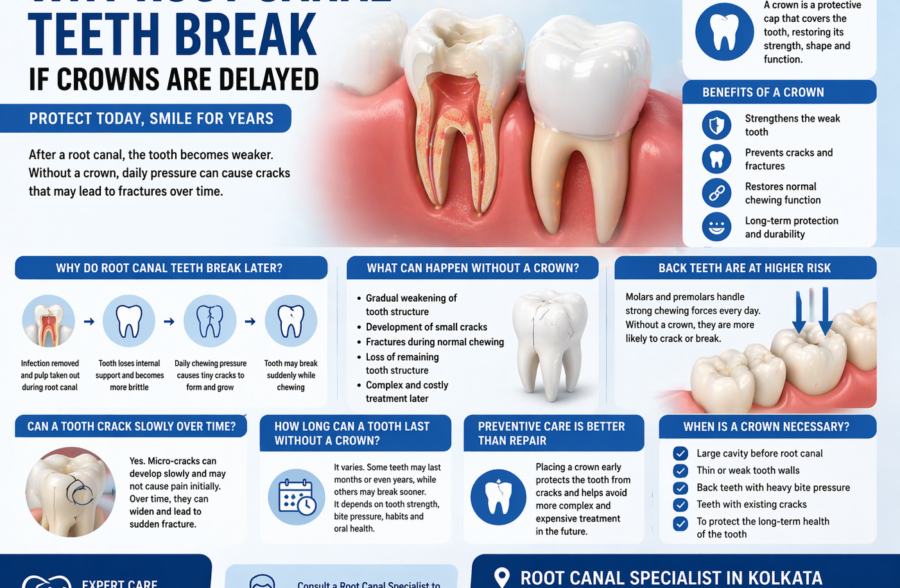
After a root canal, the treated tooth often becomes structurally weaker because the infected pulp and damaged tissue inside the tooth are removed. Without proper protection, the remaining tooth may develop small cracks that worsen over time. This is why dentists often recommend placing a crown after root canal treatment, especially for back teeth that handle heavy chewing pressure.
A crown acts like a protective cap, helping the tooth stay strong during everyday use. When crowns are delayed or skipped, the tooth may function normally for months but later break while chewing.
Understanding why this happens helps patients make informed decisions about protecting their treated teeth.
Why Do Some Root Canal Teeth Break Months After Treatment?
Many patients feel relief after completing a root canal. The pain disappears, and the tooth seems stable again. Because of this, some people postpone the next step of treatment.
However, the internal structure of the tooth has already changed.
During Root Canal Treatment in Kolkata, dentists remove infected pulp from inside the tooth. This process saves the tooth but can leave it more fragile than before.
Over time, daily chewing pressure may slowly weaken the remaining tooth walls. Small cracks can form and expand. Eventually, the tooth may break while eating something ordinary.
This delayed fracture surprises many patients because the tooth seemed fine for weeks or months.
What Happens If You Don’t Get a Crown After Root Canal?
This is one of the most common questions patients ask.
Not every tooth breaks immediately after treatment. Some continue working normally for a while. However, skipping a crown may increase the chance of structural problems later.
Without protection, the tooth may experience:
- Gradual weakening of the outer tooth walls
- Development of tiny cracks that grow over time
- Fractures during normal chewing
- Loss of remaining tooth structure
When fractures occur, treatment may become more complex than placing a crown earlier.
This is why many dentists recommend reinforcing the tooth soon after root canal therapy.
Why Teeth Become Weaker After Root Canal Treatment
A natural tooth contains living tissue inside the pulp chamber. This tissue helps maintain internal hydration and structural resilience.
After root canal treatment, the infected pulp is removed to stop the infection. While the tooth remains functional, it no longer has the same internal support.
Several factors contribute to the change in strength:
- Removal of infected internal tissue
- Existing decay that weakened the tooth before treatment
- Large cavities or previous fillings
- Loss of natural tooth structure
A Root Canal Specialist evaluates these factors before recommending a final restoration.
In many cases, a crown helps restore strength and reduce fracture risk.
Can a Root Canal Tooth Crack Slowly Over Time?
Yes, cracks may develop gradually rather than immediately.
Teeth endure constant pressure from everyday activities such as chewing and grinding. When a tooth has already lost internal strength, these forces may slowly create micro-cracks.
Micro-cracks are tiny structural lines within the tooth surface.
At first, they may not cause symptoms. Over time, however, they can widen with repeated pressure.
If the crack grows deep enough, the tooth may suddenly fracture while biting or chewing.
A crown after the root canal helps distribute chewing forces more evenly across the tooth. This protective coverage reduces stress on the remaining tooth structure.
Why Back Teeth Are More Likely to Break Without Crowns
The position of the tooth plays a major role in how much pressure it experiences.
Back teeth, such as molars and premolars, are responsible for grinding and crushing food. These teeth handle strong chewing forces every day.
Because of this pressure, they are more vulnerable after root canal treatment.
Dentists often recommend crowns for back teeth because crowns help:
- Reinforce weakened tooth walls
- Distribute bite pressure evenly
- Protect against fractures during chewing
Front teeth usually experience less pressure. In some cases, they may be restored differently depending on the remaining tooth structure.
Patients searching for the best dentist in Kolkata often discuss these restoration choices during consultation visits.
How Long Can a Root Canal Tooth Last Without a Crown?
The lifespan of an untreated root canal tooth varies from person to person.
Some teeth may function normally for months or even longer. Others may develop fractures sooner.
Several factors influence this timeline:
- Amount of remaining tooth structure
- Location of the tooth in the mouth
- Bite pressure during chewing
- Habits such as teeth grinding
- Overall oral health
Because these factors differ between patients, dentists evaluate each tooth individually.
Preventive reinforcement often helps protect the tooth before structural damage occurs.
Preventive Restoration vs Repair After a Fracture
One reason dentists recommend crowns early is to prevent future complications.
When a crown is placed soon after treatment, it strengthens the tooth before cracks begin to develop.
If a tooth fractures later, treatment may become more complex. Depending on the severity of the fracture, options may involve additional dental procedures.
Preventive care often helps avoid these situations.
A Root Canal Specialist focuses on protecting the treated tooth so it can continue functioning comfortably for many years.
How Dentists Decide When a Crown Is Necessary
Dentists consider several clinical factors before recommending a crown.
These include:
- The size of the cavity before root canal treatment
- Remaining thickness of the tooth walls
- Location of the tooth in the mouth
- Bite pressure and chewing patterns
- Previous restorations or fillings
When the tooth structure appears thin or fragile, a crown may offer stronger long-term protection.
During follow-up visits, dentists monitor how the treated tooth responds and recommend the most suitable restoration.
Protecting Your Tooth After Root Canal Treatment
A root canal removes infection and saves a natural tooth. However, protecting the tooth afterward is just as important as the treatment itself.
Teeth that lose internal support may slowly develop cracks from daily chewing forces. Over time, these cracks can lead to unexpected fractures.
Understanding the role of a crown after a root canal helps patients make informed decisions about long-term dental health.
When questions arise about restoration options, guidance from experienced dental professionals can provide clarity and reassurance. At Precision Dental & Implant Center, patients receive careful evaluation and thoughtful treatment focused on preserving natural teeth and supporting lasting oral health.
FAQs
Can a root canal tooth break months after treatment?
Yes. Root canal teeth may function normally for months, but later fracture if the remaining structure becomes weak during everyday chewing.
Why do dentists recommend crowns after root canal treatment?
Crowns reinforce weakened teeth and distribute chewing pressure evenly. They help protect the tooth from cracks and fractures over time.
Is it risky to delay a crown after a root canal?
Delaying a crown may allow small cracks to develop in the tooth. Over time, these cracks may lead to fractures during normal chewing.
Do all root canal teeth need crowns?
Not always. Some teeth with enough natural structure may not require crowns. Dentists evaluate the tooth’s strength and position before recommending restoration.
Can a cracked root canal tooth be repaired?
Minor cracks may sometimes be restored. However, severe fractures can make treatment more complex, which is why early protection is often recommended.
How soon should a crown be placed after root canal treatment?
Dentists usually recommend placing the final restoration within a few weeks to protect the tooth while the temporary filling is still in place.