

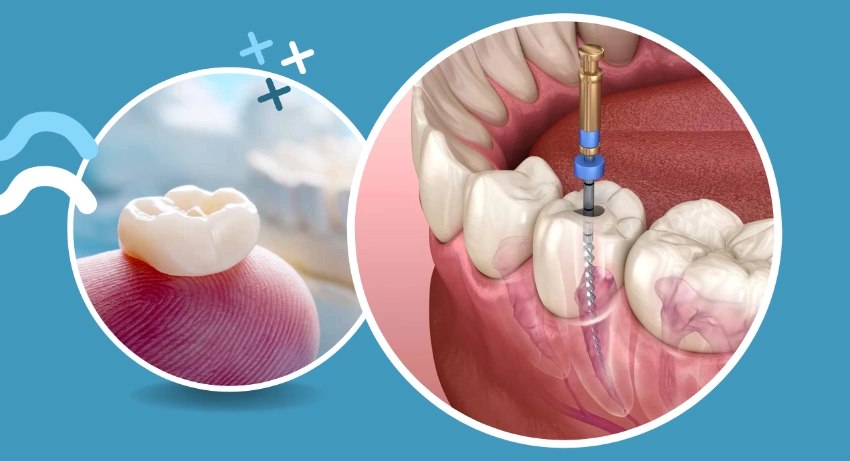
After a root canal, dentists often recommend either a dental filling or a crown to restore the treated tooth. The right choice depends on several factors, including the amount of remaining tooth structure, the size of the cavity before treatment, bite pressure, and the position of the tooth in the mouth.
In many cases, a crown after root canal provides added strength and protection, especially for back teeth that handle heavy chewing forces. However, some teeth with enough natural structure may be safely restored with a filling.
Understanding how dentists evaluate these factors can help patients make informed decisions about their long-term dental health.
Why Do Teeth Need Restoration After a Root Canal?
Root canal treatment removes infection from inside the tooth and saves it from extraction. However, the procedure also leaves the tooth structurally weaker than before.
This happens because:
- The infected pulp is removed from inside the tooth
- Decay or damage often removes part of the natural structure
- The tooth may already have a large cavity or previous filling
Because of these changes, dentists restore the tooth to protect it from fracture and restore normal function.
The two most common options are:
- Dental fillings
- Dental crowns
A dentist or Root Canal Specialist decides between them after evaluating the tooth carefully.
Filling vs Crown After Root Canal: What’s the Difference?
Understanding the difference between these two restorations helps clarify why dentists sometimes recommend one over the other.
Dental Filling
A filling repairs a smaller portion of the tooth.
It is typically used when:
- Most of the natural tooth structure remains
- The cavity is relatively small
- The tooth does not experience heavy bite pressure
Fillings restore shape and function while preserving natural tooth tissue.
Dental Crown
A crown covers the entire visible part of the tooth.
It acts like a protective cap that:
- Reinforces weakened teeth
- Prevents fractures
- Restores strength for chewing
A crown after root canal is often recommended for teeth that have lost significant structure.
Do All Root Canal Teeth Need a Crown?
Not always. Some teeth can function well with a filling instead of a crown.
However, several factors influence this decision.
Dentists look at:
- Remaining tooth structure
- Tooth location in the mouth
- Size of the cavity before treatment
- Bite pressure during chewing
When these factors suggest higher fracture risk, a crown may offer better long-term protection.
Patients undergoing Root Canal Treatment in Kolkata often ask this question during follow-up visits, as the final restoration plays a key role in the tooth’s durability.
How Dentists Decide Between a Filling or Crown
Dentists use a careful clinical assessment before recommending a restoration.
Here are the most important factors.
1. Remaining Tooth Structure
The amount of healthy teeth left after treatment is one of the biggest deciding factors.
If most of the tooth remains intact, a filling may be sufficient.
However, when a large portion of the tooth has been removed due to decay or damage, a crown provides stronger reinforcement.
Signs a crown may be recommended include:
- Large missing sections of the tooth
- Cracks or structural weakness
- Previous large fillings
2. Size of the Cavity Before Root Canal
Teeth needing root canals often already have significant decay.
When a cavity is very large, the remaining tooth walls may become thin.
Thin walls can crack under pressure during chewing. A crown helps distribute bite forces evenly across the tooth.
This reduces the chance of fracture over time.
3. Bite Pressure During Chewing
Back teeth handle most of the chewing workload.
Molars and premolars experience strong bite pressure daily.
Because of this, dentists commonly recommend a crown after root canal for these teeth.
Front teeth usually experience lighter biting forces, which means a filling may sometimes be enough.
4. Position of the Tooth in the Mouth
The location of the tooth strongly influences restoration decisions.
Back Teeth (Molars and Premolars)
These teeth:
- Handle heavy chewing forces
- Experience greater stress during eating
- Are more likely to crack after treatment
Crowns are often recommended to protect them.
Front Teeth
Front teeth typically:
- Experience lower bite pressure
- Retain more natural structure after treatment
In some cases, a filling can work well for these teeth.
A Root Canal Specialist evaluates these differences before deciding the best option.
What Happens If a Weak Tooth Isn’t Protected?
When a treated tooth lacks sufficient support, it may gradually develop structural problems.
Possible risks include:
- Cracks in the tooth surface
- Fractures during chewing
- Loss of tooth structure over time
- Need for more complex treatment later
Restorations such as crowns help protect vulnerable teeth and allow them to function normally for many years.
For patients looking for the best dentist in Kolkata, understanding this preventive approach often helps them feel more confident about treatment decisions.
Can a Filling Be Replaced With a Crown Later?
Yes, in many situations a filling can later be replaced with a crown if needed.
Dentists may initially restore a tooth with a filling and monitor it over time.
If signs of weakness appear, they may recommend upgrading to a crown.
Regular dental checkups help monitor the condition of the restored tooth and ensure it remains stable.
How Long Do Crowns and Fillings Last After Root Canal?
The longevity of restorations varies based on several factors.
These include:
- Oral hygiene habits
- Bite pressure and grinding
- Tooth location
- Type of restoration used
With proper care:
- Fillings can last several years
- Crowns often provide longer structural support
Routine dental visits help ensure restorations remain strong and functional.
Protecting Your Tooth After Root Canal Treatment
A root canal saves a damaged or infected tooth, but the restoration placed afterward determines how well the tooth functions in the long term.
Choosing between a filling and a crown after root canal is not a one-size decision. Dentists carefully evaluate the tooth’s strength, location, and structure before recommending the most appropriate option.
When questions arise about restoring a treated tooth, professional guidance can help clarify the safest and most effective approach. At Precision Dental & Implant Center, patients receive thoughtful care focused on preserving natural teeth and supporting lasting oral health.
FAQs
Do I always need a crown after root canal treatment?
Not always. Some teeth with enough remaining structure can be restored with a filling. However, many back teeth benefit from a crown for added strength.
Why do dentists recommend crowns for molars after root canal?
Molars handle strong chewing forces. A crown protects the tooth from cracking and distributes bite pressure evenly during daily eating and grinding.
Can a root canal tooth break without a crown?
Yes, especially if the tooth has lost significant structure. Without reinforcement, the remaining tooth walls may weaken over time and fracture during chewing.
Is a filling cheaper than a crown after root canal?
Fillings usually cost less initially. However, crowns may offer better long-term protection for structurally weakened teeth, especially molars and heavily damaged teeth.
How soon should a crown be placed after root canal treatment?
Dentists usually recommend placing the final restoration within a few weeks to protect the tooth from damage while the temporary filling is still in place.
Can front teeth be restored without crowns after root canal?
Sometimes yes. Front teeth often experience lower bite pressure and may retain enough structure to be restored successfully with a filling.